Australian Military Ordinariate Chaplains
Australian Defence Force (ADF) Chaplains serving within the Catholic Military Ordinariate of Australia (CMOA) fulfill their dual obligations as military officers and Catholic clergy by strictly adhering to the National Catholic Safeguarding Standards (NCSS).
Because ADF CMOA chaplains operate in high-pressure, secular, and diverse environments across domestic bases, hospitals, and active combat zones, their compliance framework is robust, structured, and carefully aligned with both military operational readiness and church accountability guidelines.
1. Fulfilling Mandatory Supervision Hours
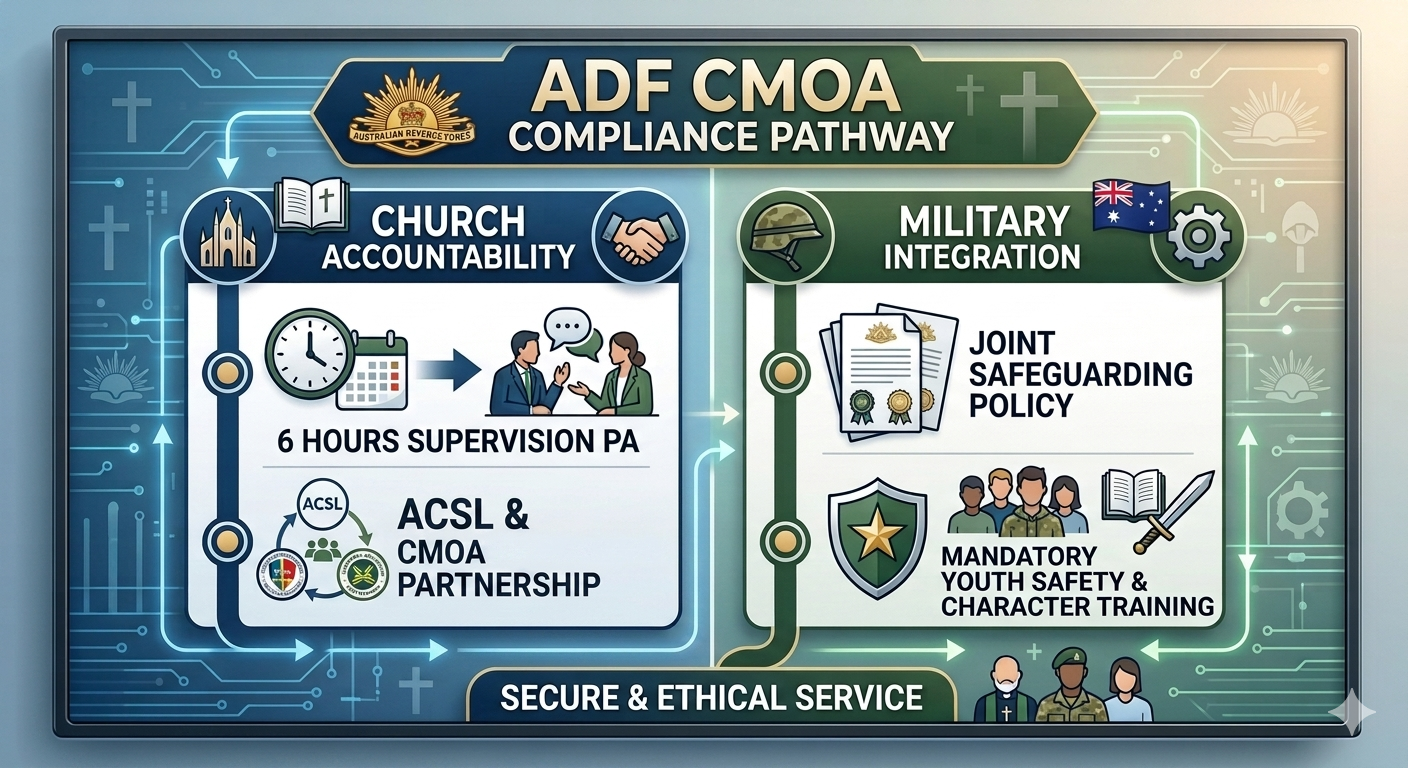
In alignment with NCSS Indicator 5.5.3, all CMOA Chaplains engaged in full-time, active ministry must complete a minimum of 6 hours of professional or pastoral supervision each year.
- Critical Reflection: This requirement creates a dedicated, confidential space for chaplains to critically and theologically evaluate their complex pastoral work within the military unit.
- High-Stakes Support: It serves as a necessary professional safeguard, protecting the mental and spiritual well-being of the chaplain as they support personnel through deployment trauma, grief, and crisis care.
2. Dual-Agency Safeguarding Frameworks
CMOA Chaplains work under a integrated safeguarding network:
- Ecclesiastical Alignment: The CMOA works directly in collaboration with Australian Catholic Safeguarding Limited (ACSL) and the Office of Safeguarding in the Archdiocese of Canberra-Goulburn. This ensures that the diocese’s code of conduct and screening protocols map perfectly to national Catholic metrics.
- Defence Force Mandates: Because chaplains maintain a commissioned rank, they are simultaneously bound by mandatory ADF youth safety training and defence compliance requirements.
3. Rigorous Selection, Vetting, and Screening
Before a Catholic minister is deployed as an ADF chaplain, they undergo exhaustive screening that directly honors the strict recruitment principles of Standard 5:
- Ecclesiastical Endorsement: They must be a priest, deacon, or pastoral lay minister in good standing, formally released by their sending home diocese, and specifically endorsed by the Military Bishop.
- Professional Prerequisites: Candidates must hold at least a three-to-four-year bachelor's degree in theology or ministry and possess 2 to 5 years of verified parish pastoral experience to prove capability before ever working with defense personnel and their families.
4. Upholding Excellence as Ethical Guides
Standard 5 mandates that personnel are adequately trained to reflect core safeguarding values. CMOA Chaplains implement this daily by serving as the command's ethical compass. They share direct structural responsibility for the character and moral development of Defence Force personnel, leading instruction that promotes responsible moral judgment, equity, safety, and respect across the wider Australian community.